Tuesday Poster Session
Category: Colon
.jpg "Saqr Alsakarneh, MD, MS photo")
Saqr Alsakarneh, MD, MS
Mayo Clinic
Rochester, MN
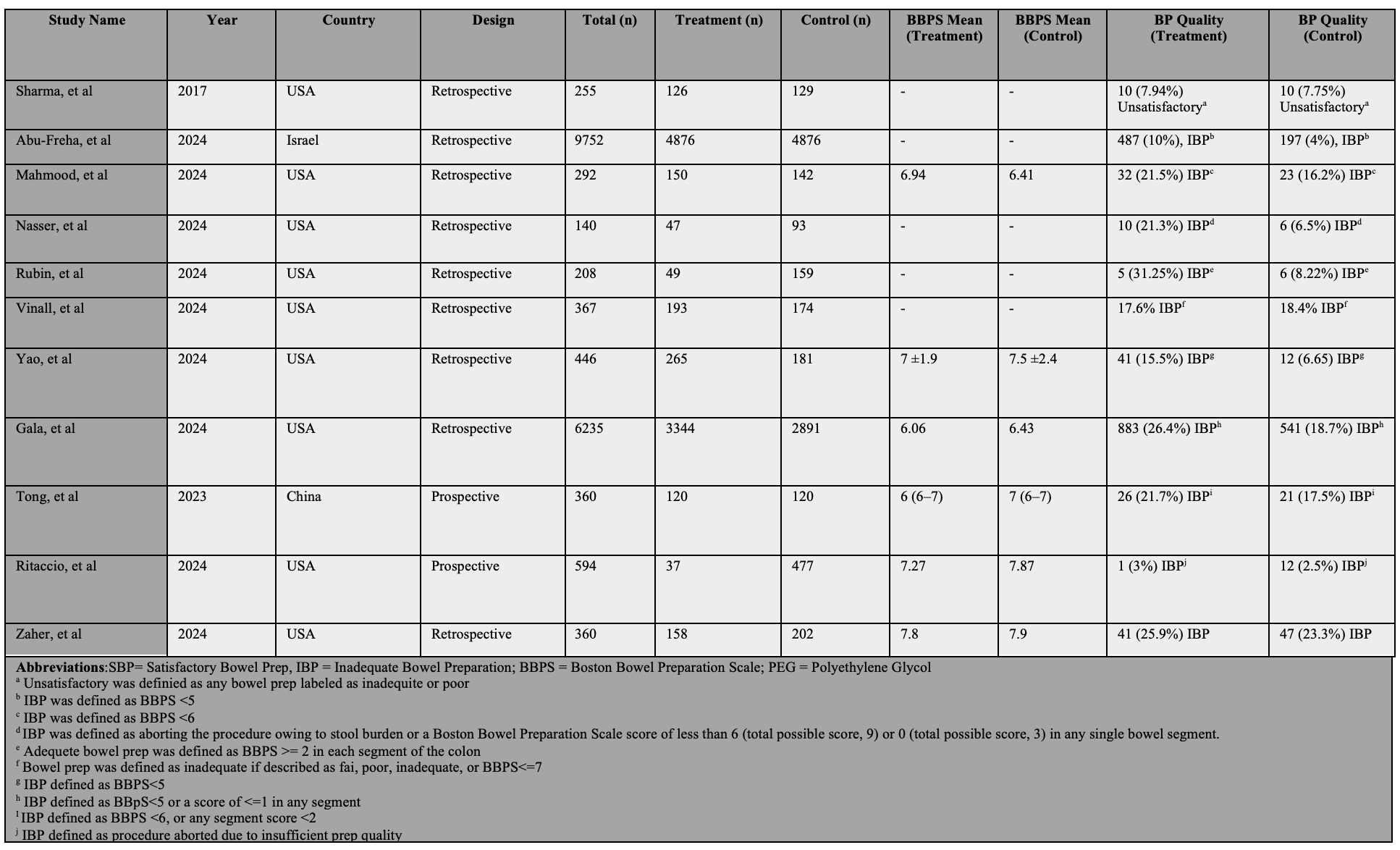
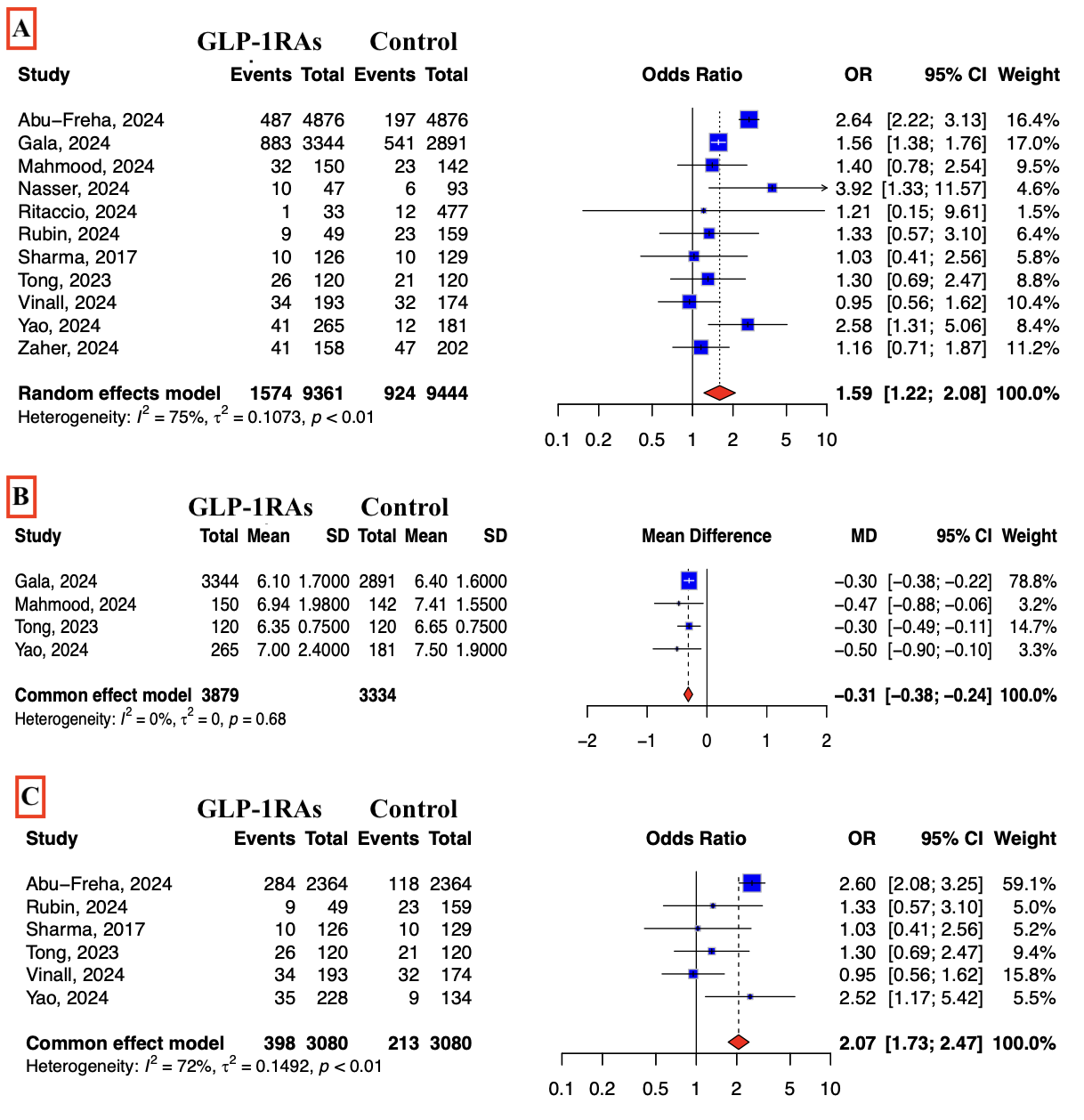
Our initial search resulted in 832 citations and 11 studies were included in the final analysis. A total of 18,805 patients were included (GLP-1RAs cohort, n=9,361; control, n=9,444) [Table 1]. GLP-1RAs use was associated with a significantly higher risk of IBP compared to the control group (16.8% vs 9.8%; OR = 1.59, [95% CI: 1.22 – 2.08], p < 0.01, Figure 1-A). Similarly, the mean BBPS score was lower in the GLP-1RAs group compared to the control group (MD = -0.31; 95% CI -0.38, -0.24; p < 0.001; Figure 1-B) with no observed heterogeneity between included studies (I2 = 0%). A sensitivity analysis among diabetic patients showed similar increased IBP risk (OR = 2.07, [95% CI: 1.73 – 2.47], p < 0.01, Figure 1-C). Additionally, GLP-1RA users had higher odds of requiring repeat colonoscopy due to IBP (OR = 1.77; 95% CI: 1.04–3.01; p=0.03).
GLP-1RAs are associated with a significantly increased risk of inadequate bowel preparation, lower BBPS scores, and higher repeat colonoscopy rates. These findings support considering temporary cessation of GLP-1RAs in patients undergoing colonoscopy, particularly those with additional risk factors for poor bowel prep.